Cataracts: When Does Clouded Vision Call for Surgery?
A cataract is a clouding of the eye's normally clear lens, and it often develops slowly with age. Surgery is usually considered when the clouding interferes with things you need or want to do, such as driving at night, reading, or recognizing faces, not simply because a cataract is present.
Written By: DocAi Health Editorial Team
Last Updated: 2026-09-29
A cataract is a clouding of the eye's normally clear lens, and it often develops slowly with age. Surgery is usually considered when the clouding interferes with things you need or want to do, such as driving at night, reading, or recognizing faces, not simply because a cataract is present. This article explains the symptoms, how clinicians decide about surgery, what the operation involves, and which sudden vision changes need urgent care.
What a cataract is and why vision gets cloudy
The lens sits behind the pupil and focuses light onto the retina. It is made mostly of water and protein. Over time, some of that protein can clump, and the lens becomes cloudy. MedlinePlus describes a cataract as a clouding of the lens that is common in older adults and often develops slowly (MedlinePlus: Cataract).
Think of looking through a fogged or frosted window. Light still gets in, but it scatters, so images look dim, washed out, or hazy. Cataracts can affect one eye or both, and the two eyes may differ in how affected they are.
Common symptoms of a cataract
Early cataracts may cause few symptoms. As the clouding progresses, people often describe:
- Blurry, cloudy, or "foggy" vision that glasses do not fully fix
- Glare from sunlight, lamps, or oncoming headlights, and halos around lights
- Trouble seeing at night
- Colors that look faded or yellowed
- Double vision in one eye
- Needing brighter light to read, or frequent changes to your glasses prescription
Because the change is gradual, many people do not notice it until a task becomes hard. Some people notice a temporary improvement in near vision as the lens changes, though this is not a reliable or lasting effect.
What contributes to cataracts
Several factors contribute, and the exact mechanism is not fully understood. Aging is a common cause. Other factors associated with cataracts include:
- Diabetes, which is linked to earlier or faster lens changes (see MedlinePlus: Diabetic Eye Problems)
- Long-term ultraviolet light exposure from the sun
- Smoking and heavy alcohol use
- Long-term use of corticosteroid medicines
- Past eye injury or eye surgery, and some eye inflammation
- A family history of cataracts
Cataracts can also be present at birth or appear in childhood, which needs prompt evaluation by an eye specialist because a child's visual system is still developing.
How cataracts are evaluated
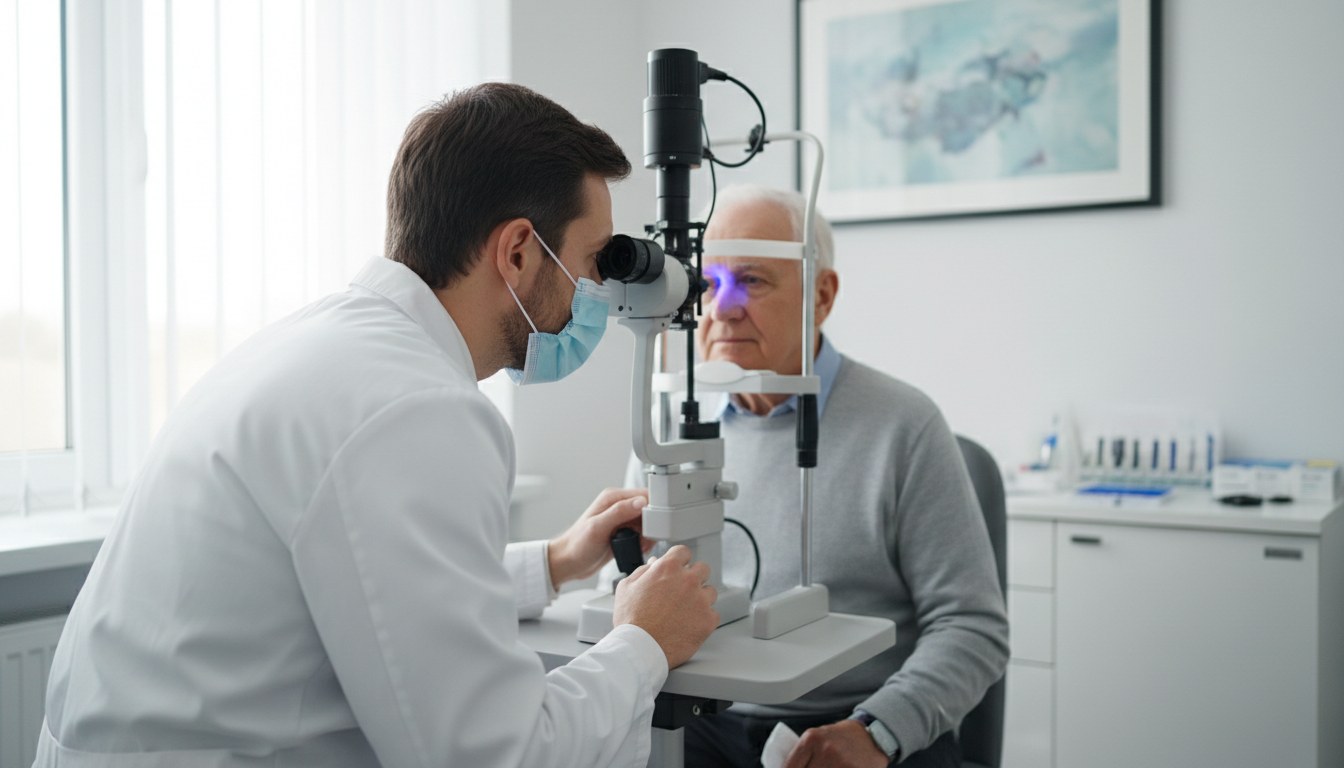
An eye care professional combines your history, a vision test, and an examination of the eye. This usually includes dilating the pupil so the lens and the back of the eye can be seen. The exam also checks for other conditions that can blur vision, such as glaucoma or macular degeneration, because a cloudy lens may not be the only reason vision has changed. If you are worried about those, see our articles on glaucoma and age-related macular degeneration. If your blurriness comes and goes, that pattern has its own explanations and is covered separately.
When does a cataract call for surgery?
There is no single vision number that automatically means surgery. The decision is usually shared between you and your eye surgeon, and it often rests on how much the cataract limits your daily function and safety. Questions that tend to guide the discussion include:
- Is it hard to drive, especially at night or in glare?
- Do you have trouble reading, working, cooking, or recognizing faces?
- Have you had falls or near-misses that may relate to poor vision?
- Does glare or blur limit hobbies or independence?
Surgery is also sometimes recommended when a cataract makes it hard to examine or treat another eye problem, such as diabetic eye disease. In other cases, the cataract itself causes eye problems, for example when a very swollen lens contributes to a type of glaucoma. Your surgeon can explain whether that applies to you.
If the cataract is mild and not bothering you, many clinicians suggest watching it with regular exams. Updated glasses, brighter lighting, anti-glare lenses, and magnifiers can help for a while. No eye drop, supplement, or diet has been shown to reverse an established cataract in people. Laboratory research on foods and cataract prevention is interesting but preliminary.
What cataract surgery involves
In cataract surgery, the surgeon removes the cloudy lens and usually replaces it with a clear artificial lens, called an intraocular lens. The most common technique is phacoemulsification, in which an ultrasound probe breaks the lens into small pieces that are suctioned out through a tiny incision. It is typically done as an outpatient procedure with numbing medicine and, often, light sedation.
Intraocular lenses come in different types. Some are set mainly for distance vision, and others are designed to help with a wider range of distances or to correct astigmatism. Which type fits depends on your eyes, your lifestyle, and cost, since some options are not fully covered by insurance. Ask your surgeon how each choice may affect your need for glasses afterward.
Clinical studies, including a prospective cohort of phacoemulsification surgeries listed in Sources, generally report that many people see better after uncomplicated cataract surgery, though results vary. Other eye conditions, such as macular degeneration or glaucoma, can limit how much vision improves.
Risks and what to discuss beforehand
Cataract surgery is commonly performed and is generally considered safe, but no operation is risk free. Possible complications include inflammation, infection inside the eye, swelling of the retina, retinal detachment, increased eye pressure, and clouding of the membrane behind the new lens, which can often be treated with a quick laser procedure. Tell your surgeon about all medicines you take, including blood thinners and alpha-blocker medicines used for prostate symptoms, such as tamsulosin, which can make the iris behave differently during surgery. Do not change or stop any prescription on your own. Your surgeon and prescriber can decide what is appropriate before the procedure.
Your surgeon will give you eye drops to prevent infection and reduce inflammation after surgery. Follow the instructions you are given, and tell your clinician if you have trouble using the drops.
Recovery and follow-up
Many people notice improvement fairly soon, though healing continues over the following weeks. Mild scratchiness, watering, and light sensitivity can occur. Your surgical team will tell you when to return for checks and which activities to avoid, such as rubbing the eye, swimming, or heavy lifting. Follow-up timing varies by surgeon and by how the surgery went. Researchers have compared different follow-up schedules after uncomplicated surgery, which is one reason practices differ.
If you have cataracts in both eyes, surgery is often done on one eye at a time, with a gap between operations so the first eye can be checked.
Protecting your eyes in the meantime
- Get regular eye exams, especially if you have diabetes, a family history of eye disease, or are older
- Wear sunglasses that block ultraviolet light
- Do not smoke, and talk with your clinician about help quitting
- Work with your care team on blood sugar if you have diabetes
- Use good lighting at home, and take extra care with night driving if glare is a problem
Eye care basics are summarized by MedlinePlus (MedlinePlus: Eye Care).
When sudden changes are not a cataract
Cataracts usually change vision slowly. Sudden changes point to other problems that can threaten sight and need urgent evaluation, including retinal detachment, a blocked blood vessel in the eye, a sharp rise in eye pressure, or a stroke.
Double vision deserves a closer look, because the cover test matters. Double vision that persists when only one eye is open is usually caused by the eye itself, such as the lens, cornea, or a refractive problem, and can be raised at a routine eye exam. New double vision that goes away when you cover either eye (it appears only with both eyes open) can come from eye misalignment, a nerve problem, or a problem in the brain, including stroke. It needs same-day evaluation, and a droopy eyelid, eye pain, an enlarged pupil, or severe headache alongside it can point to a nerve problem that needs emergency care. If it comes with any stroke sign, call 911. The emergency box below lists what to watch for.
When to Seek Medical Care
When to Seek Urgent or Emergency Care
Cataracts usually blur vision slowly, so a sudden change is a different kind of problem that can threaten sight or signal a stroke. The lists below separate what needs 911 or the emergency room now from what needs prompt care. This guidance is in addition to, not a replacement for, the general disclaimer above.
Emergency, call 911 or go to the emergency room immediately if:
- Sudden loss of vision in one or both eyes, or a curtain or shadow that spreads across your sight, needs emergency care because retinal problems can threaten vision if treatment is delayed.
- Vision changes, including sudden double vision, together with face drooping, arm weakness, trouble speaking, confusion, or sudden severe headache may be a stroke, so call 911 first.
- New double vision that goes away when you cover either eye, together with a droopy eyelid, an enlarged pupil, eye pain, or severe headache, can signal a nerve problem or a problem in the brain and needs emergency care now.
- Sudden severe eye pain with headache, nausea or vomiting, a red eye, and halos around lights can signal a rapid rise in eye pressure and needs emergency care now.
- For a chemical splash, flush the eye right away with clean running water for at least 15 minutes, then call 911 or go to the ER. For a sharp object stuck in the eye, do not remove it or press on the eye; cover it with a rigid shield, such as a paper cup, and call 911 or go to the ER.
- Severe eye pain, worsening redness, or a sudden drop in vision after recent eye surgery may signal infection inside the eye, so call your surgeon's urgent line right away, and go to an emergency room if you cannot reach them promptly.
See a doctor soon (same-day or next available appointment) if:
- New double vision that goes away when you cover either eye, without the warning features listed above, needs same-day evaluation by an eye professional or urgent care clinician because it can have nerve or brain causes.
- A sudden shower of new floaters or flashes of light, even without vision loss, should be evaluated by an eye professional the same day because it can come with retinal tears.
- Gradual worsening of vision that makes driving, reading, or walking unsafe deserves a prompt eye appointment to discuss whether surgery is appropriate.
- Gradual glare and halos that interfere with night driving, or double vision that persists when only one eye is open and may be lens-related, can be raised at a routine eye exam at your next available visit.
- After cataract surgery, increasing redness, discharge, or blurry vision that is not improving should be reported to your surgeon the same day, and sooner if it is worsening quickly or painful.
- A white-looking pupil, or cloudiness in a baby's or child's eye, needs prompt evaluation, so call a pediatrician or pediatric eye specialist and ask for an urgent appointment.
Frequently Asked Questions
Do cataracts go away on their own?
No. Once a cataract has formed, it does not clear up by itself, and no eye drop, supplement, or diet has been proven to reverse one in people. Many cataracts progress slowly, so some people manage with new glasses and better lighting for years. Surgery is the treatment that removes a cataract.
Can I wait to have cataract surgery?
In many cases, yes. A cataract usually does not harm the eye by waiting, so timing often depends on how much it affects your daily life and safety. Some situations are different, such as when it limits treatment of another eye disease. Your eye surgeon can tell you whether waiting makes sense for you.
Is cataract surgery painful?
Most people receive numbing medicine and light sedation, so the procedure is typically not painful, though you may feel pressure or see lights. Afterward, scratchiness, watering, or mild discomfort can occur. Severe pain or worsening redness is not expected and should be reported to your surgeon promptly.
How long does cataract surgery take?
The operation itself is usually brief and done as an outpatient procedure, but plan for extra time for check-in, preparation, and monitoring afterward. You will need a ride home. Your surgical team can tell you what to expect for your schedule and aftercare.
Will I still need glasses after cataract surgery?
Possibly. Many people need less dependence on glasses, but whether you still need them depends on the lens implant chosen, astigmatism, and other eye conditions. Reading glasses are common after surgery. Talk with your surgeon beforehand about your goals so the lens choice can be matched to them.
Can cataracts come back after surgery?
The artificial lens does not become a cataract. However, the thin membrane that holds the lens can become cloudy over time, causing vision to blur again. This is often treated with a quick laser procedure done in the office. Tell your eye clinician if your vision worsens after surgery.
Does diabetes make cataracts more likely?
Diabetes is associated with developing cataracts earlier or more often. It also affects the retina, so a dilated eye exam is important when you have diabetes. Discuss with your care team how blood sugar management and regular eye exams fit your situation, and let your eye surgeon know about your diabetes before surgery.
How can I tell a cataract from glaucoma or macular degeneration?
You usually cannot tell on your own, because several eye conditions blur vision and can coexist. Glaucoma can cause vision loss without early symptoms, and macular degeneration often affects central vision. An eye professional can combine your history, vision testing, and a dilated exam to sort out the cause.
Related articles
Glaucoma: Why Can Vision Be Lost Before You Notice Anything?Type 2 Diabetes: Causes, Symptoms, and ManagementMigraine or Something More Serious? How to Tell the DifferenceSources
- MedlinePlus (NIH) - Cataract
- MedlinePlus (NIH) - Eye Diseases
- MedlinePlus (NIH) - Diabetic Eye Problems
- MedlinePlus (NIH) - Vision Impairment and Blindness
- MedlinePlus (NIH) - Eye Care
- PubMed Central (NIH) - Post-operative Day Zero Versus Day One Follow-Up for Uncomplicated Cataract Surgery
- PubMed Central (NIH) - Long-Term Outcomes of Phacoemulsification Surgeries at ECWA Eye Hospital: A Prospective Clinical Cohort Study