How Do You Get Rid of Head Lice, and Must a Child Stay Home from School?
To get rid of head lice, confirm a live louse, then treat with a medicated lotion used exactly as labeled or with repeated wet combing, and check the hair again in a few days.
Written By: DocAi Health Editorial Team
Last Updated: 2026-09-20
To get rid of head lice, confirm a live louse, then treat with a medicated lotion used exactly as labeled or with repeated wet combing, and check the hair again in a few days. Lice spread mostly through head-to-head contact, are a nuisance rather than a sign of poor hygiene, and are not known to spread disease. Many schools now let a child return after treatment starts, though policies vary. This article covers confirming lice, treatment options and label cautions, cleaning, school rules, and when to call a clinician.
How to Get Rid of Head Lice: Confirm the Diagnosis First
Treating a scalp that does not have lice wastes time and exposes your child to products they do not need. MedlinePlus (NIH) describes head lice as tiny insects that live on the scalp and hair, with itching as a common symptom. Itching can have other causes, including dry scalp, dandruff, eczema, and reactions to hair products, which is why a live louse matters more than a scratchy head. Some children with lice do not itch much at all, so a lack of scratching does not rule them out.
Here is what you are looking for:
- Live lice: grayish-tan, about the size of a sesame seed, and quick to move away from light. They are easiest to find near the nape of the neck and behind the ears.
- Nits (eggs): tiny oval specks glued to the hair shaft close to the scalp. Dandruff and hair-product flakes brush off easily, while a nit stays stuck and has to be slid down the strand.
- Empty egg cases: these can sit farther along the hair as it grows and do not by themselves show an active infestation.
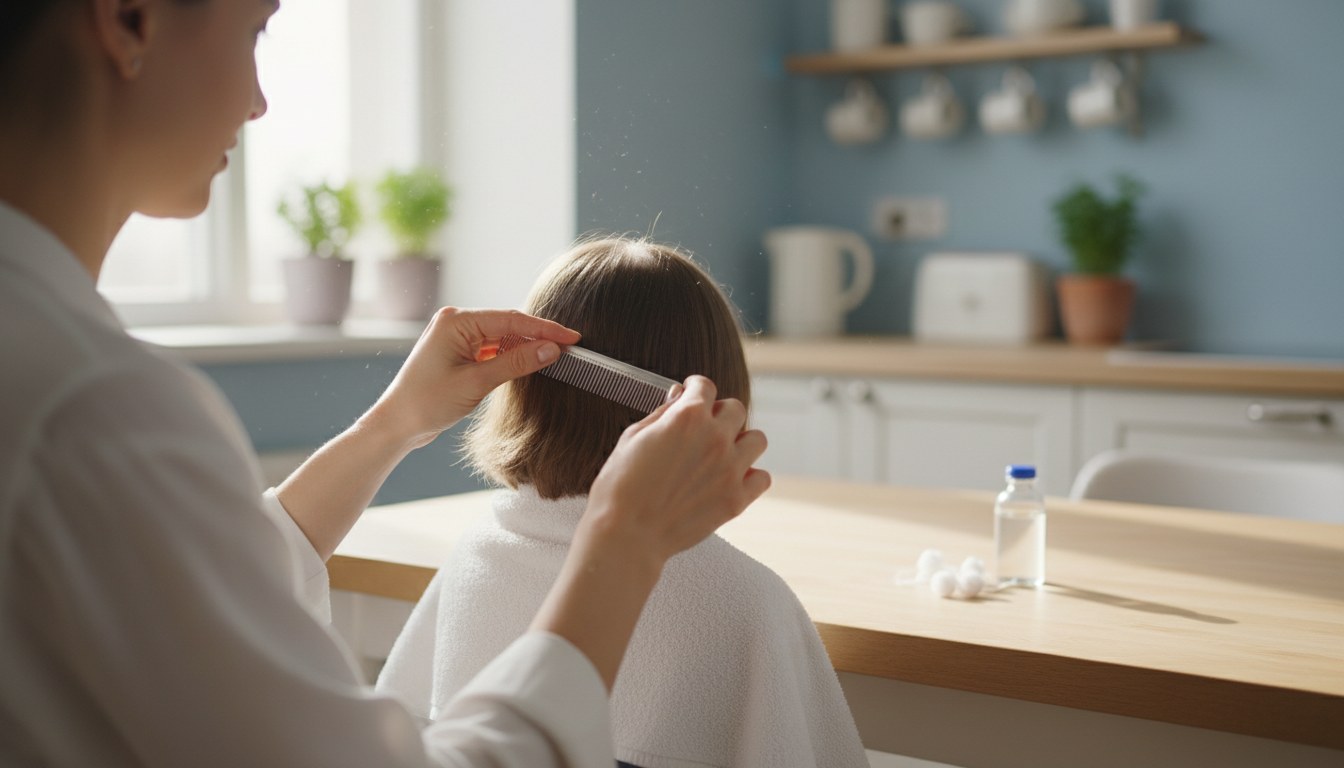
Good light and a fine-toothed comb on damp, conditioned hair make the search easier. Section the hair and comb from the scalp to the tips, wiping the comb on a white paper towel after each pass. If you find a live louse, treat. If you only find a few nits far from the scalp and no live lice, they may be old, empty cases, and a clinician or school nurse can help you decide.
How Lice Spread and What Does Not Cause Them
Lice crawl; they do not jump or fly. They spread mainly when heads touch, such as during play, sleepovers, or group photos. Sharing hats, brushes, helmets, or pillows may contribute less often, because lice survive only a short time away from a warm scalp. Having lice has nothing to do with how often someone washes their hair. This is a common, widely shared problem and not a mark of poor care.
Treatment Options for Head Lice
There is more than one reasonable way to treat head lice, and which one fits depends on your child's age, the product's label, and what has already been tried. MedlinePlus describes both over-the-counter and prescription treatments. Clinicians combine your child's age, health history, and treatment history when choosing among them.
Over-the-counter medicated lotions
Over-the-counter products typically contain permethrin or pyrethrins. These products have label minimum ages, so check the current label for your child's age and ask a pharmacist or pediatrician before using one in a baby or toddler. Pyrethrin products can cause reactions in people allergic to chrysanthemums or ragweed. You apply these products to the scalp and hair, leave them on for the time on the label, then rinse. Label directions differ between brands, including whether to use conditioner beforehand and when a second application is advised. Because some lice survive a single treatment, many labels call for a repeat, so read your product's instructions carefully and ask a pharmacist if anything is unclear.
Prescription options
If lice are still alive after you used an over-the-counter product correctly, a clinician may prescribe a different type of treatment. Prescription lotions and similar products exist for head lice, including benzyl alcohol lotion, ivermectin lotion, and spinosad, and each has its own labeled minimum age and cautions. Labels can change, so check the current label for each product and ask your prescriber before using one on a baby or toddler. Benzyl alcohol has been linked with a serious breathing problem called gasping syndrome in very young infants, which is one reason age limits matter. Some products are flammable and should be kept away from heat sources such as hair dryers and open flames.
Lindane is an older prescription shampoo. Its product labeling carries a boxed warning about serious nervous system effects, including seizures. It is reserved for cases where other treatments have failed or cannot be used, and it should not be used on infants, on people with seizure disorders, or on broken skin. Your prescriber can tell you which option suits your child and how to apply it safely. Do not change the instructions on a prescription on your own.
Why treatment sometimes fails
The common reasons are simple: the product was not applied to all the hair, it was rinsed or diluted too soon, the repeat application was skipped, or the child was re-exposed. Resistance of lice to permethrin and pyrethrins has also been reported in some areas of the US, which is one reason a clinician may suggest a different type of treatment if live lice remain after correct use. Leaving a product on longer than the label directs is not a safe fix and may raise the risk of skin irritation or other side effects. If a product appears to have failed, tell a clinician what you used, how, and when, so they can decide on a next step.
Wet combing without insecticides
Some families prefer to avoid medicated products, especially for babies and toddlers or when a product is not suitable. Wet combing uses conditioner and a fine-toothed lice comb to remove lice and nits from damp hair. A 2005 UK trial, Single blind, randomised, comparative study of the Bug Buster kit and over the counter pediculicide treatments against head lice in the United Kingdom, reported higher cure rates for a branded combing kit than for the UK over-the-counter insecticides it was compared with. It was one older trial with products that differ from US formulations, so it suggests only that combing can be a reasonable choice. It takes patience: comb every strand, section by section, and repeat every 3 to 4 days for about 2 weeks, or as your clinician or the product instructions advise, until no live lice are found.
Home remedies
Mayonnaise, oils, vinegar, and similar kitchen remedies are popular, but the reliable evidence behind them is limited. Do not use gasoline, kerosene, or other flammable or toxic substances on a child's scalp, which can cause burns, poisoning, and fire.
Safety Cautions When Treating a Child
- Follow the age limits and the timing on the label. Treatment of infants and very young children is a question for the pediatrician, and some products are not suitable for babies at all.
- Check the current label for the minimum age of any over-the-counter or prescription product, and ask a pharmacist, pediatrician, or prescriber if you are unsure.
- Check with a clinician before using a medicated lotion if the person being treated is pregnant, is breastfeeding, or has asthma, allergies, or a skin condition such as eczema.
- Keep hair dryers, heated styling tools, and open flames away from any flammable lice product, and read the label for heat warnings.
- Lindane shampoo has a boxed warning about seizures and other nervous system effects. Ask your prescriber or pharmacist before considering it.
- Do not repeat a product more often or more times than the label or prescriber directs, and do not leave it on longer than the label says.
- Keep products away from the eyes, mouth, and broken skin. If a product gets into the eyes, rinse with plenty of water and call a clinician.
- Store treatments out of children's reach. If a child swallows a lice product, call Poison Control at 1-800-222-1222 right away, even if they seem well, and call 911 if they are choking, struggling to breathe, unresponsive, or having a seizure.
Cleaning the Home Without Overdoing It
Lice survive only a short time away from the scalp, so a deep clean is rarely the main fix. Reasonable steps include washing recently used bedding, towels, and clothing in hot water and drying on high heat, and soaking combs and brushes in hot water. Items that cannot be washed, such as stuffed toys, can be sealed in a plastic bag for a couple of weeks or put in a hot dryer if the label allows.
Does a Child Have to Stay Home From School With Head Lice?
There is no single national rule, and policies differ from district to district and school to school. Many schools no longer require a child to miss class just because lice or nits were found, and instead ask that treatment begin before the next school day. Others still use stricter rules. A few points can help:
- Check your school's or child care's written policy, or ask the school nurse what is expected before your child returns.
- Discourage head-to-head contact and sharing of hats, brushes, and helmets for the next couple of weeks.
- A "no-nit" rule, which keeps a child out until every nit is gone, is controversial because nits alone may not mean active lice. Ask the school nurse or your pediatrician if you are asked to keep your child home for nits only.
Tell the school and close contacts such as friends and relatives so they can check for lice too.
Checking the Rest of the Household and Preventing a Repeat
Check everyone who shares a bed or has close contact with your child. People with live lice are the ones who need treatment. Treating everyone in the family without checking is generally not advised. After treatment, continue to check your child's hair on a regular schedule for a couple of weeks. A new live louse after a seemingly successful treatment may mean the first treatment missed some lice, or that your child picked up a new case.
When Itching or Scratching Becomes a Problem
Scratching can break the skin, and bacteria can enter through small sores. MedlinePlus has overview pages on skin infections and itching that explain these problems more broadly. In a child with lice, signs of a skin infection include yellow or honey-colored crusts, pus, spreading redness, red streaks, warmth, increasing pain, fever, or swollen, tender glands in the neck. These need a clinician's evaluation the same day, because lice treatment alone will not clear a bacterial infection. A fever with a rapidly spreading painful red area needs same-day or emergency evaluation, depending on how ill the child looks. A child with a skin infection who becomes limp or floppy, is very hard to wake, or is breathing fast or with difficulty needs 911 or the nearest emergency room, since these can be signs of a serious spreading infection. Some children also develop a rash after a treatment product, which is a reason to call the prescriber or pharmacist.
Other conditions can mimic lice, including dandruff, seborrheic dermatitis, and contact dermatitis. If your child still has an itchy scalp and you cannot find lice, a clinician can look at the scalp directly and help you decide what is going on.
Head Lice Compared With Other Lice
Head lice are a separate kind of louse from the ones that cause body lice and pubic lice. Those are handled differently, and body lice in particular are linked with crowded living conditions and limited access to laundry. If you are not sure which type you have, a clinician can tell you.
When to Seek Medical Care
When to Seek Urgent or Emergency Care
Head lice themselves are a nuisance and not an emergency; the urgent problems come from a reaction to a treatment product, a swallowed or flammable product, or a serious skin infection. To lower these risks, follow the label's age limits and timing, do not use lindane, gasoline, or kerosene, do not repeat a treatment more often than directed, rinse the eyes with water if product gets in them, and ask a clinician before treating infants. This guidance is in addition to, not a replacement for, the general disclaimer above.
Emergency, call 911 or go to the emergency room immediately if:
- Your child develops swelling of the lips, tongue, or face, wheezing, or trouble breathing after a lice treatment was applied, which may be a severe allergic reaction.
- Your child has a seizure, becomes confused, or cannot be woken after a lice product was applied or swallowed. Call 911 and bring the product container.
- Your child swallowed a lice treatment and is choking, struggling to breathe, unresponsive, or having a seizure. Call 911 first, and call Poison Control at 1-800-222-1222 for any swallowed product.
- A child with a scratched, infected scalp is limp or floppy, very hard to wake, or breathing fast or with difficulty. Call 911 or go to the nearest emergency room.
- A child or adult has burns or fire injuries because a flammable lice product was used near heat, a hair dryer, or an open flame. Call 911 for serious burns, and keep flammable products, such as malathion lotion, away from heat sources and hair dryers.
See a doctor soon (same-day or next available appointment) if:
- Your child has a skin rash, burning, blistering, or significant scalp irritation after a lice product, which is a reason to call a clinician or pharmacist the same day.
- The scalp has sores with pus, honey-colored crusts, spreading redness, red streaks, fever, or swollen tender neck glands, without the limp, drowsy, or breathing signs listed above. Call your child's clinician the same day, or go to an emergency room if your child looks very ill.
- Your child swallowed a lice treatment, even if they seem well, or has new vomiting or unusual sleepiness afterward. Call Poison Control at 1-800-222-1222 right away.
- Live lice are still present after you used a lice treatment according to its label, including the repeat if the label calls for one. A routine visit or a call to a pharmacist is usually enough, and it does not need same-day care unless other symptoms are present.
- The child is an infant, or you are pregnant or breastfeeding, and you need advice about which lice treatment is appropriate, including which products to avoid.
- You are unsure the problem is lice, or your child has a very itchy scalp, but you cannot find a live louse.
Frequently Asked Questions
How do you get rid of head lice fast?
Confirm a live louse first. Then use an over-the-counter lotion exactly as labeled, comb the hair with a fine-toothed lice comb, and repeat the treatment if the label advises. Others use wet combing alone, repeated every few days. If live lice remain after correct use, a clinician can suggest another option, such as a prescription treatment.
Does my child have to stay home from school with lice?
It depends on your school or district. Many schools no longer require children to stay home for lice and instead ask that treatment begin before they return, while some still use stricter rules. Ask the school nurse or check the written policy, and tell your pediatrician if you are being asked to keep your child out for nits alone.
Are head lice a sign of poor hygiene?
No. Head lice spread by close head-to-head contact and can affect any child, whatever the cleanliness of their hair or home. MedlinePlus describes them as a common problem and does not link them to poor hygiene. Frequent washing does not prevent lice, and blaming a family only adds stress and stigma for the child.
Can head lice jump or fly from one person to another?
No. Head lice have no wings and cannot jump. They crawl from one head to another, mostly when heads touch. They may occasionally move through shared items such as hats, combs, or pillows, but that route seems less important. They survive only a short time away from the scalp, so most spread happens by direct contact.
Do I need to treat everyone in the house?
Not automatically. Check every person who shares a bed or has close contact with the child, and treat only those who have live lice. Treating everyone without checking exposes people to products they may not need. If you are unsure, a pharmacist or clinician can advise you, especially for babies, pregnant people, or anyone with a skin condition.
Are nits alone a reason to treat?
Not necessarily. Nits that sit close to the scalp may be viable eggs, but nits far along the hair shaft are often old and empty. Finding only nits and no live lice is a common reason for uncertainty. A school nurse, pharmacist, or clinician can look and help you decide whether treatment is appropriate.
Is it safe to use lice treatments on young children and babies?
Each product has its own labeled minimum age and cautions, and some are not suitable for infants. Lindane in particular should not be used in infants or young children. For babies and toddlers, ask a pediatrician or pharmacist before using any medicated product. Wet combing is sometimes used when a product is not appropriate.
Can I use home remedies like mayonnaise or oil?
Reliable evidence for kitchen remedies is limited, so it is hard to say how well they work. Some of them can make combing easier, but a product with a documented label may be a better choice. Do not use gasoline, kerosene, or similar fuels, which can burn the skin, cause poisoning, and start fires. Ask a pharmacist or clinician about options.
Related articles
Common Childhood Rashes: Identification, Causes, and CareIs It Pink Eye in My Child, and When Are Antibiotic Drops Needed?Chickenpox in Children: Symptoms, Home Care, and Serious ComplicationsSources
- MedlinePlus (NIH) - Head Lice
- MedlinePlus (NIH) - Itching
- MedlinePlus (NIH) - Skin Infections
- MedlinePlus (NIH) - Body Lice
- MedlinePlus (NIH) - Pubic Lice
- PubMed Central (NIH) - Single blind, randomised, comparative study of the Bug Buster kit and over the counter pediculicide treatments against head lice in the United Kingdom