Ovarian Cysts: Which Ones Are Harmless and Which Need Treatment?
Ovarian cysts are fluid-filled sacs on or inside an ovary, and many are functional cysts that form during the menstrual cycle and often go away on their own. Others, such as endometriomas, dermoid cysts or cystadenomas, may need monitoring or treatment.
Written By: DocAi Health Editorial Team
Last Updated: 2026-09-30
Ovarian cysts are fluid-filled sacs on or inside an ovary, and many are functional cysts that form during the menstrual cycle and often go away on their own. Others, such as endometriomas, dermoid cysts or cystadenomas, may need monitoring or treatment. Sudden severe pelvic pain, fainting, or pain with vomiting or fever needs urgent care. This article explains the common types, how clinicians tell them apart, what treatment can involve, and when to get help.
What are ovarian cysts, and are they usually harmless?
An ovarian cyst is a sac filled with fluid or other material that develops in or on an ovary. MedlinePlus (NIH) describes ovarian cysts as common and notes that many cause no symptoms and go away without treatment (MedlinePlus: Ovarian Cysts). In many cases they are found by chance during an ultrasound done for another reason.
Whether a cyst is harmless depends on its type, its size, its appearance on imaging, and your age and symptoms. A clinician combines these pieces rather than relying on any single finding.
Functional cysts: the everyday type
Functional cysts are related to the normal ovulation cycle. Two forms are described:
- Follicular cysts: a follicle that holds the egg may not release it and can keep growing as a fluid-filled sac.
- Corpus luteum cysts: after an egg is released, the follicle normally shrinks, but it can instead fill with fluid or blood.
These cysts are a common finding in people who menstruate, and they often shrink on their own over a few menstrual cycles. A clinician may suggest a repeat ultrasound to confirm that a cyst is shrinking. Some functional cysts cause a dull ache, pressure, or a sense of fullness on one side, and some can cause irregular bleeding. Many cause nothing at all.
Cysts that are not functional
Other cyst types do not come from the normal cycle and are less likely to disappear by themselves. Several are benign, but a clinician may want to follow them or remove them.
- Endometriomas: cysts filled with old blood that are associated with endometriosis. Our article on endometriosis symptoms covers that condition in detail.
- Dermoid cysts (mature cystic teratomas): sacs that can contain tissue such as hair or fat. They are usually benign but can grow and sometimes twist the ovary.
- Cystadenomas: cysts that develop from the surface cells of the ovary and can become large.
- Polycystic-appearing ovaries: in polycystic ovary syndrome, the ovaries can contain many small follicles. These are not the same as a single large cyst, and PCOS is diagnosed from a combination of features. See our article on PCOS symptoms and diagnosis.
A small number of ovarian masses are cancerous. This is much less common than a benign cyst, and having a cyst, or even a concerning symptom, does not establish cancer on its own. Clinicians take the features of the mass into account, as described below.
Symptoms that may point to an ovarian cyst
Many cysts cause no symptoms. When they do, people can notice:
- Pelvic or lower abdominal pain, often dull, sometimes on one side
- Bloating or a feeling of fullness
- Pain during sex
- Pain during bowel movements or pressure on the bladder
- Changes in the menstrual cycle or irregular bleeding
These symptoms overlap with many other conditions, including endometriosis, pelvic infection, and digestive problems. If pain comes with unusual discharge, see our article on pelvic inflammatory disease.
Complications: when a cyst becomes an emergency
Most cysts never cause a serious problem, but two complications are worth knowing because they can need urgent care.
Rupture
A cyst can burst and cause sudden pain. Some ruptures are mild, but bleeding into the abdomen can occur and may become serious. Dizziness, fainting, a racing heartbeat, or pain that is severe and worsening can be signs of significant internal bleeding and need emergency evaluation.
Ovarian torsion
Torsion happens when an ovary twists and its blood supply is reduced. It is associated with larger cysts or masses. It often causes sudden, severe pain on one side, frequently with nausea or vomiting. Torsion can threaten the ovary and needs prompt emergency evaluation. A history of a known cyst makes this more plausible, but torsion can occur in other situations too.
Pregnancy matters
Severe pelvic pain in someone who could be pregnant needs urgent evaluation, because an ectopic pregnancy can look similar to a ruptured cyst and is dangerous. A clinician will usually check a pregnancy test early.
How clinicians evaluate an ovarian cyst
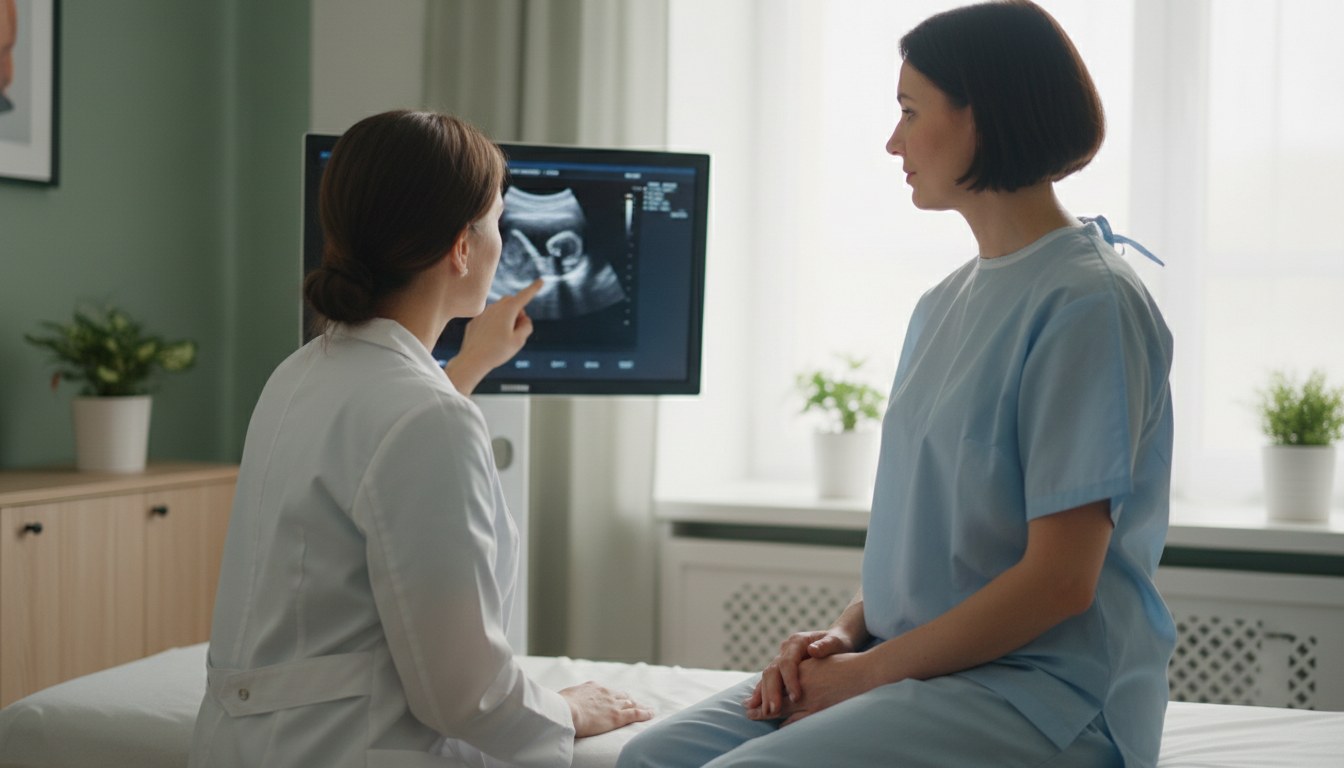
Evaluation usually starts with your history, a pelvic exam, and a pregnancy test. Pelvic ultrasound is the imaging test most often used, and it shows the size of the cyst and whether it looks simple (fluid only) or complex (solid areas, thick walls, or internal structures).
When a mass looks complex, clinicians may use additional tools. One approach described in the medical literature is the International Ovarian Tumor Analysis (IOTA) ADNEX model, which combines ultrasound features, age, and sometimes a blood marker to estimate the likelihood that a mass is benign or malignant (Preoperative Risk Stratification of Adnexal Masses, PubMed Central). Blood tests such as CA-125 may be used in some situations, but this marker can be raised by non-cancer conditions such as endometriosis, so it is interpreted together with the whole picture. MRI may be added when ultrasound is unclear.
Treatment options
Treatment depends on cyst type, size, symptoms, age, and whether you are before or after menopause.
- Watchful waiting: for many simple, small cysts without symptoms, clinicians may recommend repeat imaging to confirm the cyst is shrinking or stable.
- Pain relief: over-the-counter pain relievers may help with discomfort. Check the label and ask your pharmacist or clinician which is appropriate for you, especially if you have kidney, liver or stomach conditions or take blood thinners. Our comparison of ibuprofen and acetaminophen covers the differences.
- Hormonal birth control: sometimes discussed to reduce the chance of new functional cysts, though it may not shrink an existing cyst. Hormonal medicines have their own cautions, so ask your prescriber whether one is suitable for you.
- Surgery: may be considered for cysts that are large, persistent, causing significant symptoms, or have features that raise concern. Many procedures are done laparoscopically (through small incisions), and often the aim is to remove the cyst while preserving the ovary where possible. The surgeon will discuss which approach fits your situation.
After menopause and during pregnancy
After menopause, ovaries no longer ovulate, so a new cyst is less likely to be functional. Clinicians tend to look more carefully at cysts found in this stage of life. This does not mean a cyst is cancer, as simple cysts are also found in postmenopausal people, but it is one reason follow-up is usually advised.
Cysts are also found during pregnancy, often at the first ultrasound. Many are functional and may shrink on their own. Your obstetric clinician will decide on monitoring.
What to tell your clinician
Before your visit, it can help to note when the pain began, where it is, how it changes with your cycle, whether you have had bleeding changes, and the date of your last period. Tell your clinician if you have a family history of ovarian or breast cancer, as this may affect how they weigh the findings. Keep any prior ultrasound reports so a clinician can compare size over time.
When to Seek Medical Care
When to Seek Urgent or Emergency Care
Most ovarian cysts are not emergencies, but a rupture or a twisted ovary can threaten your health or the ovary itself. This list separates what needs 911 or the emergency room now from what needs a prompt appointment. This guidance is in addition to, not a replacement for, the general disclaimer above.
Emergency, call 911 or go to the emergency room immediately if:
- Sudden, severe pelvic or lower abdominal pain, especially on one side, with nausea or vomiting, which may be a sign of a twisted ovary.
- Pelvic pain together with fainting, near-fainting, dizziness, or a racing heartbeat, which can be signs of internal bleeding from a ruptured cyst.
- Severe pelvic pain with a fever, shaking chills, or a rigid, very tender abdomen, which may suggest infection or a serious abdominal problem.
- Severe pelvic or abdominal pain when you are or could be pregnant, with or without vaginal bleeding, or pain felt in the shoulder tip, because an ectopic pregnancy can look like a ruptured cyst.
- Pale, cold, clammy skin with weakness or confusion alongside abdominal pain, which can be a sign of significant blood loss.
See a doctor soon (same-day or next available appointment) if:
- Pelvic pain or pressure that is new, keeps returning, or is getting worse over several days, even if it is not severe.
- Persistent bloating, a feeling of fullness, or trouble eating that does not go away, which a clinician should evaluate.
- Pain during sex, during bowel movements, or with urination that is new or ongoing.
- Irregular or heavy vaginal bleeding, or bleeding after menopause, which should be checked promptly.
- A known cyst that has not been rechecked on the schedule your clinician advised, or an ultrasound report that mentions a complex or solid area.
Frequently Asked Questions
Do ovarian cysts go away on their own?
Many do. Functional cysts, which are linked to the ovulation cycle, often shrink over a few menstrual cycles without treatment. Cysts such as dermoids, endometriomas, and cystadenomas are less likely to resolve by themselves. A clinician may repeat an ultrasound to see whether a cyst is changing before deciding on next steps.
Can an ovarian cyst cause pain in my lower back or side?
It can. Some cysts cause a dull ache in the lower abdomen, pelvis, or side, and some people feel it in the lower back. Because many other problems, including kidney stones and digestive conditions, can cause similar pain, a clinician usually needs to examine you and may order imaging.
How do I know if my cyst has ruptured?
A ruptured cyst often causes sudden pain on one side of the lower abdomen. Some ruptures are mild and settle on their own, but dizziness, fainting, a fast heartbeat, or worsening severe pain can suggest internal bleeding and needs emergency care. Do not try to sort this out at home if the pain is severe.
Can an ovarian cyst turn into cancer?
Most ovarian cysts are benign, and functional cysts are not considered cancerous. A small number of ovarian masses are malignant, and clinicians look at ultrasound features, age, and sometimes blood tests to judge the likelihood. A cyst alone does not establish cancer, so follow the monitoring plan your clinician sets.
Can ovarian cysts affect fertility?
Most functional cysts do not affect fertility. Some conditions linked to cysts, such as endometriosis and PCOS, can make conceiving harder for some people. If you are trying to conceive and have a cyst, tell your clinician so they can plan monitoring or treatment with that goal in mind.
Is exercise safe if I have an ovarian cyst?
Light activity such as walking is generally fine for many people with a small cyst and no pain. Some clinicians advise caution with high-impact or twisting activity if a cyst is large, since larger cysts may be linked to torsion. Ask your clinician what is appropriate for your cyst size and symptoms.
Do I need surgery for an ovarian cyst?
Not usually. Many cysts are simply monitored. Surgery may be considered when a cyst is large, keeps growing or persists, causes significant symptoms, or has features that raise concern on imaging. Your surgeon should explain the options, including whether the ovary can be preserved, so you can decide together.
What is the difference between PCOS and an ovarian cyst?
An ovarian cyst is a single sac, often a functional one tied to a menstrual cycle. PCOS is a hormonal condition diagnosed from a combination of features such as irregular periods and signs of excess androgens, and the ovaries may show many small follicles. Having a cyst does not mean you have PCOS.
Related articles
PCOS (Polycystic Ovary Syndrome): Symptoms and DiagnosisEndometriosis: Symptoms and When to See a DoctorPelvic Pain With Unusual Discharge: Could It Be Pelvic Inflammatory Disease?Sources
- MedlinePlus (NIH) - Ovarian Cysts
- MedlinePlus (NIH) - Ovarian Disorders
- MedlinePlus (NIH) - Polycystic Ovary Syndrome
- PubMed Central (NIH) - Preoperative Risk Stratification of Adnexal Masses: A Narrative Review of Diagnostic Models and the International Ovarian Tumor Analysis (IOTA) Assessment of Different Neoplasias in the Adnexa (ADNEX) Performance