Fever for Five Days With Red Eyes and a Rash: Could It Be Kawasaki Disease?
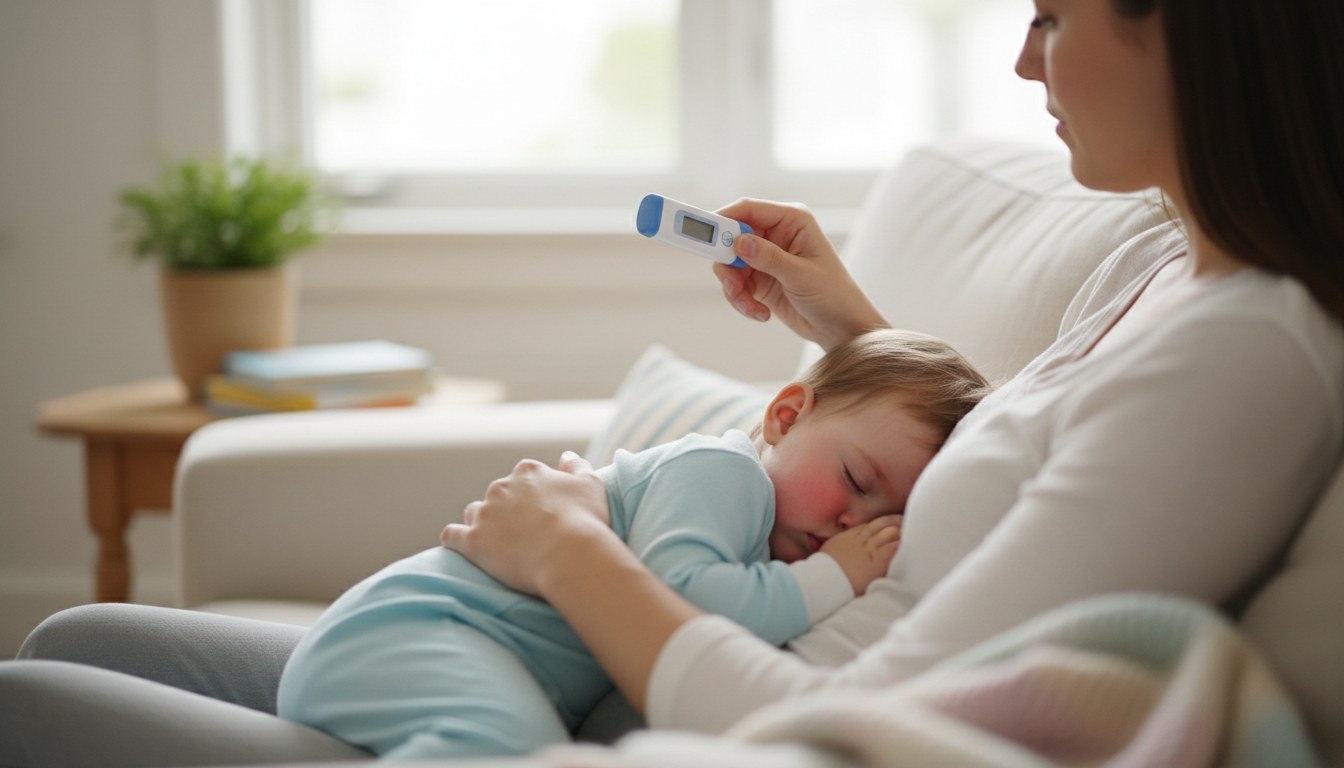
A fever lasting several days with red eyes and a rash in a young child can be Kawasaki disease, an inflammation of blood vessels that may affect the heart's coronary arteries if it goes untreated. Many other illnesses look similar, so a doctor needs to examine your child rather than wait it out.
Written By: DocAi Health Editorial Team
Last Updated: 2026-09-26
A fever lasting several days with red eyes and a rash in a young child can be Kawasaki disease, an inflammation of blood vessels that may affect the heart's coronary arteries if it goes untreated. Many other illnesses look similar, so a doctor needs to examine your child rather than wait it out. This article covers the signs doctors look for, look-alike conditions, how it is evaluated and treated, and which symptoms need 911.
Kawasaki disease: what a long fever with red eyes and a rash may suggest
Kawasaki disease is an illness that causes inflammation in the walls of blood vessels throughout the body. MedlinePlus (NIH) describes it as an illness that mostly affects children under age 5, and notes that it can cause lasting heart problems when the coronary arteries are involved. The cause is not fully understood. Several factors, including infections and a child's own immune response, are thought to play a part.
Fever with red eyes and a rash is a classic pattern: a fever that keeps going, eyes that look red, and a rash. None of these alone establishes the diagnosis. Together, and especially in a child who seems unusually irritable or miserable, they are a good reason to have your child examined promptly.
Kawasaki disease is much less common than the everyday viral illnesses that also cause fever and rash. Many children with this combination turn out to have one of those. The reason doctors take it seriously is that the treatment may work best when it is started early, and the heart complications are the part that matters most.
The features doctors look for
There is no single feature that settles the question. Clinicians look for a pattern. Descriptions of the illness, including the MedlinePlus page above, commonly list a fever of five or more days together with most of the following signs. Classic criteria call for four of the five features below along with the fever, and doctors also consider incomplete forms, covered later in this article.
- Red eyes. Both eyes are usually bloodshot, often without much pus or crusting. This differs from typical pink eye from bacteria, where yellow discharge is common.
- Changes in the mouth and lips. Lips may be bright red, dry or cracked. The tongue can look swollen and red with prominent bumps, sometimes called a strawberry tongue.
- A rash. It can appear on the trunk, in the diaper area or on the limbs. It does not look the same in every child.
- Changes in the hands and feet. Palms and soles may turn red and the hands or feet may look puffy. Skin around the fingertips and toes can begin to peel in the weeks that follow.
- A swollen lymph node in the neck. Often on one side. If this is your main worry, our article on swollen lymph nodes in a child's neck covers the many ordinary causes.
Children do not all show every sign at once. Some features come and go, so photos taken on your phone can help the doctor see what you saw earlier in the day.
How many days of fever is too long in a child with red eyes and a rash?
You do not need to wait for a particular number of days before calling. A child with fever and a new rash, red eyes, a cracked lip or marked fussiness can be evaluated earlier, and the doctor can decide whether to watch, test or refer. Days of fever are one piece of the picture, not a countdown you must reach.
Keep a simple written log: the date the fever started, the highest readings you measured, any medicine you gave and when, and the day each new sign appeared. This helps the clinician put the timeline together, which is central to this diagnosis. For general fever guidance, see our article on fever in children.
Incomplete Kawasaki disease in babies and older children
Some children have a fever that lasts several days but show only a few of the classic signs. This is sometimes called incomplete Kawasaki disease. It can occur in young infants, who may have fewer visible features, and the illness can still involve the heart. For this reason, tell the clinician if your child has had an unexplained fever for several days even when the rash or eye redness has been mild or has faded.
What else can look like this
Many conditions cause fever with red eyes and a rash. A clinician sorts through these using the history, the exam and testing:
- Common viral infections. Adenovirus and other viruses can cause fever, red eyes and rash. Ordinary viral illnesses are among the more common explanations for childhood fevers; MedlinePlus: Common Cold describes one everyday example.
- Strep throat and scarlet fever. A sore throat with fever and a sandpaper-like rash may point toward a throat infection. MedlinePlus: Tonsillitis explains how throat infections are evaluated.
- Measles and rubella. These vaccine-preventable infections cause fever and rash. Rubella is described on MedlinePlus. Tell the clinician about your child's vaccination status and any recent travel or exposure.
- Tick-borne illness. If your child has had a tick bite or has been in tick country, mention it, since some tick-borne infections cause fever and rash (see MedlinePlus: Lyme Disease).
- Drug reactions. A new medicine can cause fever and rash. Tell the clinician about everything your child has taken.
- Multisystem inflammatory syndrome in children (MIS-C). This condition, which can follow a COVID-19 infection, can overlap with Kawasaki disease, which is one reason hospital teams look at the whole child rather than one symptom.
Our article on a baby with a rash and a fever covers the broader rash-and-fever checklist. Here, the focus is the pattern that raises concern for Kawasaki disease.
How doctors evaluate a child with suspected Kawasaki disease
No single test confirms the diagnosis. Clinicians combine the history, an examination and testing. This often includes blood tests that look for signs of inflammation and anemia, a urine test, and sometimes a throat swab to look for strep. An echocardiogram, an ultrasound of the heart, is used to look at the coronary arteries. An electrocardiogram may also be done. Because the heart findings can change over time, a doctor may repeat the ultrasound at follow-up visits.
Some children are admitted to the hospital for evaluation and treatment. This can feel alarming, but it allows the care team to monitor your child closely and to treat early if the picture fits.
Treatment and what to expect
When Kawasaki disease is diagnosed, children are typically treated in a hospital. As MedlinePlus describes, treatment usually includes intravenous immunoglobulin, a preparation of antibodies given through a vein, and aspirin. Outcomes vary from child to child, but early treatment may reduce the chance of heart complications. Some children need additional medicines if the fever continues or returns, and the cardiology team decides how long to follow the heart.
A medication caution for parents. Aspirin is usually avoided in children because it has been linked to a rare but serious condition called Reye syndrome, and aspirin labels carry a warning about use in children and teenagers who have viral illnesses. In Kawasaki disease, the specialist team may choose aspirin deliberately and supervise it. Do not give aspirin on your own, and do not change the timing or amount of any medicine the team prescribes. Ask your child's prescriber or pharmacist if you have questions, and read the label on any product before you give it.
Children who receive immunoglobulin may need to delay measles- and varicella-containing vaccines, and aspirin use can matter for influenza and varicella vaccination. Ask the care team about timing for your child. General vaccine information is on MedlinePlus: Vaccine Safety.
The heart is the main concern
The coronary arteries supply blood to the heart muscle. In Kawasaki disease, inflammation may weaken the artery wall and cause it to widen, which is called an aneurysm. Not every child develops this, and many children recover without lasting heart problems, especially when treated early. Children who do have artery changes need regular follow-up with a pediatric cardiologist. Ask the cardiology team what activity limits, if any, apply to your child.
Chest pain together with fainting, trouble breathing, pallor or sweating, or chest pain after a recent Kawasaki diagnosis, can be a sign of a heart problem and needs emergency care.
What you can do while you arrange care
- Call your pediatrician the same day if your child has a fever that continues along with red eyes, a rash, cracked lips or swollen hands and feet. Tell the office you are worried about Kawasaki disease so the nurse can triage appropriately.
- Take clear photos of the rash, eyes, lips and tongue, because signs can fade between visits.
- Offer fluids. Note how many wet diapers or bathroom trips your child has had.
- Do not give aspirin or any aspirin-containing product, including salicylate products such as bismuth subsalicylate, to a child unless the child's doctor prescribes it. Kawasaki disease treatment can include doctor-directed aspirin, but giving it on your own risks Reye syndrome. Ask the doctor before using ibuprofen (Advil, Motrin) if Kawasaki disease is suspected or diagnosed, since ibuprofen may interfere with aspirin's effect on platelets, and do not give ibuprofen to babies under 6 months without medical direction.
- If you use a fever reducer such as acetaminophen (Tylenol), follow the product label for your child's age and ask your pediatrician or pharmacist about the amount; do not work out a dose yourself. Do not give any fever reducer to a baby under 12 weeks without medical direction. A baby under 28 days with a temperature of 100.4°F (38°C) or higher, or any ill-appearing baby under 3 months, should go to the emergency room now, with no home treatment first. For a baby 1 to 3 months old with that temperature, call the pediatrician right away; the baby needs to be examined in person today, and if that cannot happen promptly, go to the emergency room. Fever reducers can ease discomfort but do not prevent or treat Kawasaki disease. Keep a fever log with each temperature and the time of each dose so you can share it, because fever reducers can blur the fever pattern the doctor needs to see.
- Bring a list of any medicines, recent illnesses, tick exposures and vaccines.
A fever reducer may make your child more comfortable, but a lower temperature does not show that the illness is mild. Judge by how your child looks and acts, and by whether the other signs are present.
When to Seek Medical Care
When to Seek Urgent or Emergency Care
Most children with fever and a rash do not need 911, but a few signs suggest a threatened heart, breathing or circulation and cannot wait for an office visit. This guidance is in addition to, not a replacement for, the general disclaimer above.
Emergency, call 911 or go to the emergency room immediately if:
- Your child has chest pain together with fainting, trouble breathing, pallor or sweating, or has chest pain after a recent Kawasaki disease diagnosis, which can suggest the heart is involved.
- Your child faints, collapses, has a seizure, is limp or hard to wake, or has cold, clammy, mottled skin, which can signal a serious heart rhythm problem, poor circulation or shock.
- Your child is struggling to breathe, breathing very fast, or has blue, gray or very pale skin or lips.
- Your baby is under 28 days old with a temperature of 100.4°F (38°C) or higher, or is any ill-appearing baby under 3 months with a fever, and needs the emergency room now, with no home treatment first.
- Your child has a stiff neck with a severe headache or confusion along with fever, or a rash that looks like bruises or purple spots and the child appears very ill.
- Your child has a very fast heartbeat that does not settle with rest and is pale, sweaty or hard to wake, which can signal shock or a heart rhythm problem.
See a doctor soon (same-day or next available appointment) if:
- Your child has had a fever for five or more days (or fewer days with several of these signs) along with red eyes, a rash, red cracked lips, a strawberry tongue, swollen red hands or feet, or a swollen neck gland, and needs to be seen today by a pediatrician, urgent care or the emergency room, not later in the week.
- Your baby is 1 to 3 months old and has a temperature of 100.4°F (38°C) or higher, so call the pediatrician right away; the baby needs to be examined in person today, and if that cannot happen promptly, go to the emergency room, and do not give a fever reducer without medical direction.
- Your child's hands or feet look red or swollen, or the skin around the fingertips and toes has begun to peel after a recent fever, and needs to be examined today.
- Your child has a swollen, tender lymph node in the neck along with a fever that has not settled.
- Your child is drinking much less than usual, has far fewer wet diapers or urinates less, or seems unusually irritable or sleepy but can still be awakened.
- Your child has a fever that returns after improving, or a rash that is spreading or changing, and has not yet been examined by a clinician.
Frequently Asked Questions
How many days of fever is concerning for Kawasaki disease?
Descriptions of Kawasaki disease, including MedlinePlus, commonly list a fever of five or more days along with other signs such as red eyes, a rash, and changes of the lips, hands or feet. You do not need to wait for that point. A child with a fever and several of these signs can be evaluated sooner by a pediatrician.
Can a child have Kawasaki disease without all the symptoms?
Yes. Some children have only a few of the usual signs, sometimes called incomplete Kawasaki disease, and this can happen in young infants. Clinicians look at the whole pattern, the timeline of the fever, and test results. If your child has had a long unexplained fever, tell the doctor even if the rash or red eyes have faded.
Is Kawasaki disease contagious?
Kawasaki disease is not known to spread from person to person in the way a cold does. Its cause is not fully understood, and several factors may contribute. Because other infections that look similar can be contagious, a clinician may still suggest precautions while the cause is being sorted out. Ask your child's doctor what applies to your family.
How is Kawasaki disease treated?
Children are usually treated in a hospital, most often with intravenous immunoglobulin and aspirin under specialist supervision. Early treatment may reduce the chance of heart complications, and outcomes vary. Do not give aspirin on your own, since it is usually avoided in children for other reasons. Ask the prescriber or pharmacist about any medicine and read the label.
Can Kawasaki disease affect the heart permanently?
It can affect the coronary arteries in some children, which may lead to widening called aneurysms. Many children recover without lasting heart problems, especially when treated early. Children with artery changes usually have follow-up with a pediatric cardiologist and repeat heart ultrasounds. Ask the cardiology team what monitoring and activity guidance fits your child.
Could red eyes and a rash just be a virus?
Yes, and in many cases that is the explanation. Adenovirus and other viruses, strep infections, and some vaccine-preventable illnesses can cause fever, red eyes and a rash. A clinician combines your child's history, examination and testing to tell them apart. A fever that keeps going, or a child who looks unwell, is worth same-day evaluation.
Should I give my child ibuprofen or aspirin for the fever?
Aspirin is usually avoided in children because of the risk of Reye syndrome, though a specialist team may use it deliberately in Kawasaki disease. Ibuprofen may interfere with aspirin's effect on platelets, so if Kawasaki disease is suspected or your child takes aspirin, ask the doctor before using it. For comfort, ask your pediatrician or pharmacist which fever reducer suits your child's age, and follow the product label.
Related articles
Fever in Children: Causes, When to Worry, and When to WaitBaby Has a Rash and a Fever: What to DoSwollen Lymph Nodes in a Child's Neck: When It's Nothing and When to Call the DoctorSources
- MedlinePlus (NIH) - Kawasaki Disease
- MedlinePlus (NIH) - Rubella
- MedlinePlus (NIH) - Tonsillitis
- MedlinePlus (NIH) - Lyme Disease
- MedlinePlus (NIH) - Common Cold
- MedlinePlus (NIH) - Vaccine Safety