Is a Changing Mole Something to Worry About?
A changing mole is worth having a clinician look at, even though most moles that change turn out to be harmless.
Written By: DocAi Health Editorial Team
Last Updated: 2026-09-22
A changing mole is worth having a clinician look at, even though most moles that change turn out to be harmless. A mole that grows, changes shape or color, becomes uneven at the border, itches, bleeds, or looks different from your other moles can sometimes be an early sign of melanoma, a type of skin cancer. This article explains which changes matter, what an exam involves, and which signs need urgent care.
Is a changing mole something to worry about?
Moles are common, and many people have several. Most are harmless. According to MedlinePlus, a mole that changes, or a new mole that looks unusual, should be checked by a health care provider because some skin cancers, including melanoma, can begin in or look like a mole (MedlinePlus: Moles).
A change does not mean you have cancer. Moles can change for ordinary reasons, and several factors contribute, including age, sun exposure, and hormonal shifts. The reason to get a change checked is that a clinician can tell the difference with a trained eye and, when needed, a small sample of the skin. One symptom alone does not establish a diagnosis.
What kinds of changes count?
Clinicians often teach the ABCDE checklist to describe features that can be associated with melanoma. It is a screening aid, not a diagnosis, and some melanomas do not fit it neatly.
- Asymmetry: one half of the mole does not match the other half.
- Border: the edge looks ragged, notched, or blurred instead of smooth.
- Color: several shades appear in one mole, such as tan, brown, black, red, white, or blue.
- Diameter: the mole is larger than a pencil eraser, although melanomas can be smaller.
- Evolving: the mole changes in size, shape, color, height, or texture over time.
Evolving is often the feature that matters most to a clinician. A mole that has looked the same for years and then begins to change deserves attention.
Other changes people notice
- A new itch, tenderness, or pain in a mole.
- Crusting, oozing, or bleeding without an injury.
- A sore that does not heal.
- Redness or swelling spreading from the edge of a mole.
- A mole that looks different from the rest of your moles. Some clinicians call this the "ugly duckling" sign.
- A new dark streak under or around a fingernail or toenail.
Why do moles change?
Moles are clusters of pigment-producing cells. They can change slowly over a lifetime. Children and teenagers often develop new moles and see existing ones grow as they do. Hormonal changes, including pregnancy, can darken or enlarge moles in some people, but a changing mole during pregnancy still deserves a clinician's look, because a hormonal explanation should not be assumed (MedlinePlus: Pregnancy).
Sun exposure is associated with more moles and with a higher chance of skin cancer. MedlinePlus notes that protecting skin from the sun can lower skin cancer risk (MedlinePlus: Sun Exposure). Not every change comes from the sun, and the mechanism behind why a particular mole changes is not fully understood.
Irritation can also play a part. A mole rubbed by a bra strap, waistband, razor, or jewelry may become red, scabbed, or sore. If the mole does not settle after the irritation is removed, that is worth having examined.
Melanoma: what it is and how common it is among skin concerns
Melanoma is a cancer that starts in melanocytes, the cells that make skin pigment. MedlinePlus describes it as less common than other skin cancers but more likely to spread if it is not found early (MedlinePlus: Melanoma). Most changing moles are not melanoma. Melanoma is much less common than the everyday explanations, and a single change does not establish it. Still, finding a melanoma early is associated with better outcomes, which is why clinicians prefer to look at a change rather than wait.
Risk factors that may raise the chance of melanoma include a history of sunburns, many moles, fair skin that burns easily, a personal or family history of melanoma, tanning bed use, and a weakened immune system. Melanoma can also occur in people with darker skin, often in less sun-exposed places such as the palms, soles, and under the nails, so a changing spot in those areas deserves a look as well.
What happens at the appointment
You can start with a primary care clinician or a dermatologist. Clinicians combine your history, an examination, and sometimes testing. Expect questions such as:
- When did you first notice the change, and what changed?
- Has the mole itched, bled, or hurt?
- Have you had severe sunburns, tanning bed use, or a family history of skin cancer?
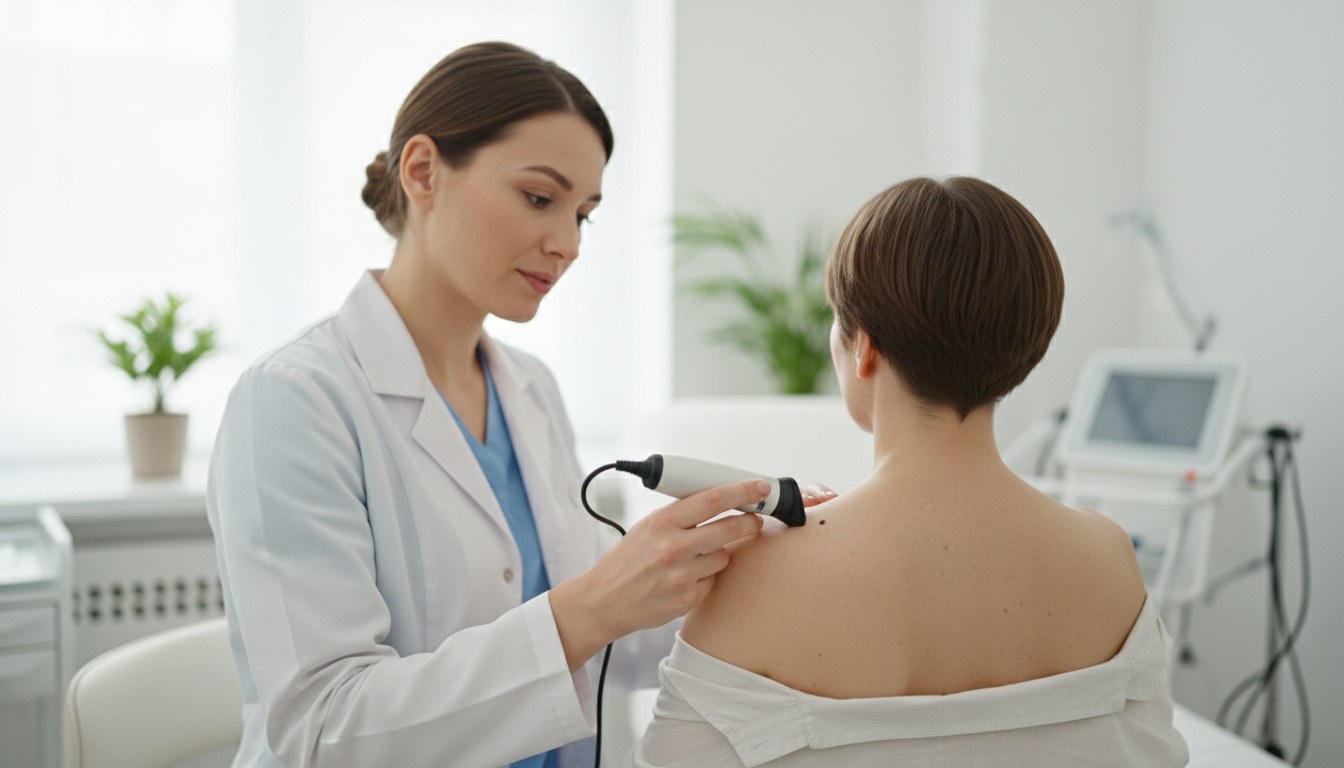
The clinician will look at the mole, often with a handheld magnifier called a dermatoscope, and may check the rest of your skin. If a mole looks suspicious, they may remove all or part of it (a biopsy) and send it to a laboratory. A biopsy is how a pathologist determines what the mole is. Results usually guide whether any further treatment is needed.
If it is not cancer
Many biopsied moles are benign. Some are atypical (dysplastic) moles, which look unusual under the microscope but are not cancer. Your clinician may suggest removing the mole or watching it, and may recommend periodic skin checks. Tell them about your history so they can decide what follow-up suits you.
Why people delay, and why a check is reasonable
Research on how people respond to skin changes shows that many wait because they do not want to waste a clinician's time or are unsure whether a mole is "serious enough" (Patient understanding of moles and skin cancer). A mole that has changed is a reasonable reason to book a visit. Worry is common and understandable. An "all-clear" can also bring relief, though you should still tell your clinician if the mole changes again afterward.
Checking your own skin at home
- Look over your whole body in good light, including your back, scalp, between toes, soles, palms, and under nails. A mirror or a trusted person can help with hard-to-see places.
- Take dated photos of moles you are unsure about, with a ruler or coin beside them, so changes are easier to judge.
- Note which moles are new and which look different from the rest.
- Bring your photos to the visit.
Self-checks complement a clinician's exam and do not replace it. Ask your clinician how often a full skin exam is appropriate for you, since that depends on your personal risk.
Reducing sun exposure going forward
Ultraviolet light from the sun and tanning beds is associated with skin damage and skin cancer. Practical steps include seeking shade during peak sun, wearing protective clothing and a hat, using broad-spectrum sunscreen, and avoiding tanning beds. These steps may lower your risk, though they cannot remove it. For other skin concerns, see MedlinePlus: Skin Conditions.
Related symptoms to mention
If you also have a lump near the mole or a new firm bump in the neck, armpit, or groin, tell your clinician. Lymph nodes can swell for many everyday reasons, covered in our article on causes of swollen lymph nodes. Itching without a visible rash is its own topic, covered in our article on itchy skin without a rash.
When to Seek Medical Care
When to Seek Urgent or Emergency Care
Most changing moles are not emergencies, but a few situations need urgent care. This list covers the uncommon problems that should not wait for a routine appointment. This guidance is in addition to, not a replacement for, the general disclaimer above.
Emergency, call 911 or go to the emergency room immediately if:
- Call 911 if a skin growth is bleeding heavily and the bleeding will not stop after firm, steady pressure for several minutes.
- Call 911 if you have a known or suspected skin cancer and develop sudden weakness on one side, facial drooping, confusion, or trouble speaking.
- Call 911 if you have a skin spot along with sudden severe shortness of breath, chest pain, or fainting.
- Call 911 if a mole or wound is surrounded by rapidly spreading redness with high fever, confusion, or a very fast heartbeat, which can suggest a serious infection.
- Call 911 if you develop a sudden severe headache, seizure, or vision loss and you have a history of melanoma.
See a doctor soon (same-day or next available appointment) if:
- Book a visit with a primary care clinician or dermatologist soon if a mole has grown, changed shape or color, or become uneven at the border.
- Seek same-day or next-available care if a mole is bleeding, oozing, or crusting without an injury, or if a sore in or near it does not heal.
- Seek prompt care if a new dark streak appears under a fingernail or toenail, or a dark spot appears on a palm or sole.
- Get seen promptly if a mole is red, warm, painful, or swelling, which can be a sign of infection or irritation that needs treatment.
- Tell your clinician soon if you have a mole plus a new firm lump in your neck, armpit, or groin that does not go away.
- Make an appointment if you have a personal or family history of melanoma and notice any new or different-looking mole.
Frequently Asked Questions
How fast can a mole change before I should worry?
There is no single speed that separates normal from concerning. Slow change over many years can occur in harmless moles, but any noticeable change in size, shape, color, height, or texture is reasonable to show a clinician. Dated photos can help you and your clinician judge what has actually changed.
Is a mole that itches a sign of cancer?
Itching can occur with irritation, dry skin, or an insect bite, and it is often harmless. A mole that newly itches, especially along with other changes such as growth, color shifts, or bleeding, is worth having examined. One symptom alone does not establish a diagnosis, but a clinician can assess it.
Can a mole turn into melanoma?
Some melanomas develop within an existing mole, while others appear as a new spot on previously clear skin. Most moles never become cancer. This is one reason clinicians pay attention both to changes in old moles and to new moles that look different from the rest.
Should I get a changing mole removed myself or with a home kit?
Home removal is not recommended. Cutting, burning, or using products on a mole can cause infection and scarring, and it can destroy tissue a pathologist needs to examine. If a mole is removed by a clinician, the sample can be sent for testing, which helps determine what it is.
Do moles change during pregnancy?
Hormonal shifts during pregnancy can cause moles to darken or grow in some people. Even so, a changing mole during pregnancy should not be assumed to be harmless. Tell your obstetric clinician or a dermatologist about it so they can examine it and decide whether any testing is appropriate.
Who should I see about a changing mole?
You can start with your primary care clinician or a dermatologist, depending on access and your insurance. Primary care clinicians can examine the mole and refer you if needed. If you have a history of skin cancer or many moles, a dermatologist may follow you more regularly.
Can children and teenagers have changing moles?
Yes. Children and teens often develop new moles, and existing ones can grow along with the child. Melanoma is much less common in young people than everyday mole changes, but a mole that bleeds, rapidly changes, or looks very different from the others is worth a pediatric clinician's evaluation.
Does having a biopsy mean I have cancer?
No. A biopsy is how a clinician finds out what a mole is, and many biopsied moles turn out to be benign or atypical but not cancerous. A clinician may recommend one when a mole looks uncertain because looking is sometimes not enough to tell. Your clinician can explain the results.
Related articles
Why Do I Bruise So Easily All of a Sudden?Itchy Skin Without a Rash: Causes and When to WorryCauses of Swollen Lymph NodesSources
- MedlinePlus (NIH) - Moles
- MedlinePlus (NIH) - Melanoma
- MedlinePlus (NIH) - Sun Exposure
- MedlinePlus (NIH) - Skin Conditions
- MedlinePlus (NIH) - Pregnancy
- PubMed Central (NIH) - Patient understanding of moles and skin cancer, and factors influencing presentation in primary care: a qualitative study